
Should You Rinse | Should your rinse after brushing?
The naturally occurring mineral fluoride can help strengthen teeth and prevent decay.
Many dental products contain fluoride, including toothpaste, mouthwash, and drinking water. Fluoride strengthens the hard outer layer of teeth, increasing the defence against tooth decay.
Spitting vs Rinsing | Why spitting is better
When using fluoride toothpaste, it is essential to follow the advice of “spitting, not rinsing.” This means that after brushing your teeth with fluoride toothpaste, you should spit out the excess toothpaste but not rinse your mouth with water. Although it may sound strange to most of you, I will explain the rationale below.
This advice is because rinsing your mouth with water after brushing can wash away the fluoride from the toothpaste, reducing its effectiveness. When you spit instead of rinsing, you leave a concentration toothpaste film layer, which increases the time for the fluoride to protect your teeth. At night your natural saliva defence goes down, and the risk of decay increases. By using this simple hack, you will significantly improve your oral health.
If not rinsing is off-putting for you (and for some, it can be), I recommend you rinse your mouth, as usual, to feel minty fresh and then brush for a few seconds with new toothpaste after, which allows the teeth to develop the fluoride film.
Fluoride toothpaste is essential for children, as their teeth are still developing and are more susceptible to decay. The NHS advises that children use fluoride toothpaste under adult supervision as soon as their first tooth emerges.
Fluoride Guidelines | Correct Amount of Fluoride for Kids
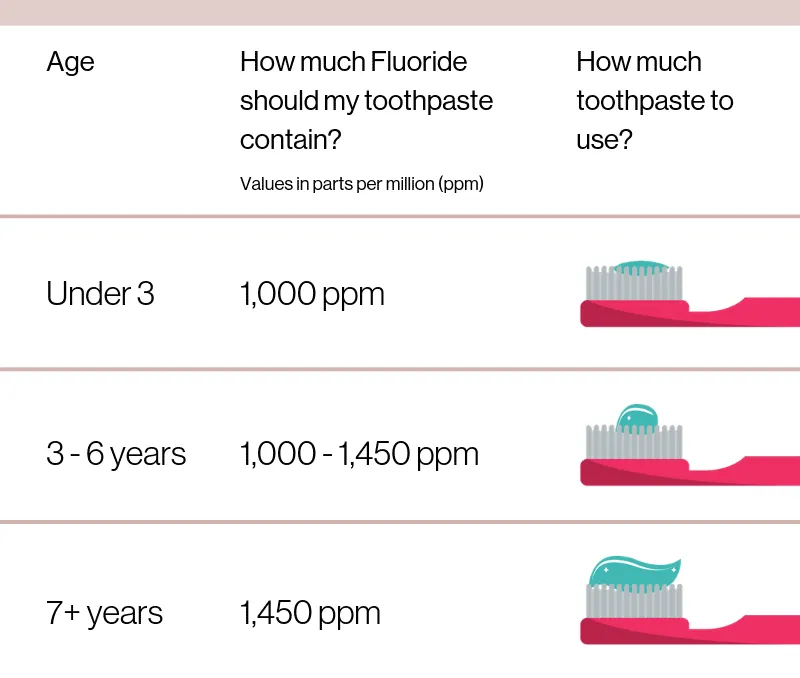
The concentration of fluoride in the toothpaste and the amount of toothpaste used is age dependent. Using the correct amount for the age range and not overusing matters for protection.
Please review the image below for the correct amount and concentration.
It’s worth noting that while fluoride is generally safe and effective, it’s possible to get too much of a good thing. In rare cases, excessive fluoride intake can cause fluorosis, resulting in white spots or discolouration on the teeth. To avoid this, following the recommended dosage of fluoride toothpaste and other fluoride sources is important.
Another way to get fluoride is through professional dental treatments, such as fluoride varnish or fluoride gel. A dentist or dental hygienist would usually apply these treatments. They can provide an extra boost of fluoride to help protect your teeth. If you are interested in this, please ask your dentist. These are prescriptive treatments as the amount of fluoride is at a higher concentration. Your dentist can advise on the benefits and their suitability.
In conclusion, fluoride is an important mineral for dental health, and fluoride toothpaste effectively protects your teeth against decay. Remember to follow the advice of “spitting, not rinsing” after brushing to ensure that the fluoride in the toothpaste has time to work.